Multi Agent RL Simulation
Simulating competitive ride-hailing on a real Manhattan road network, where two companies learn pricing and routing strategies through multi-agent RL.
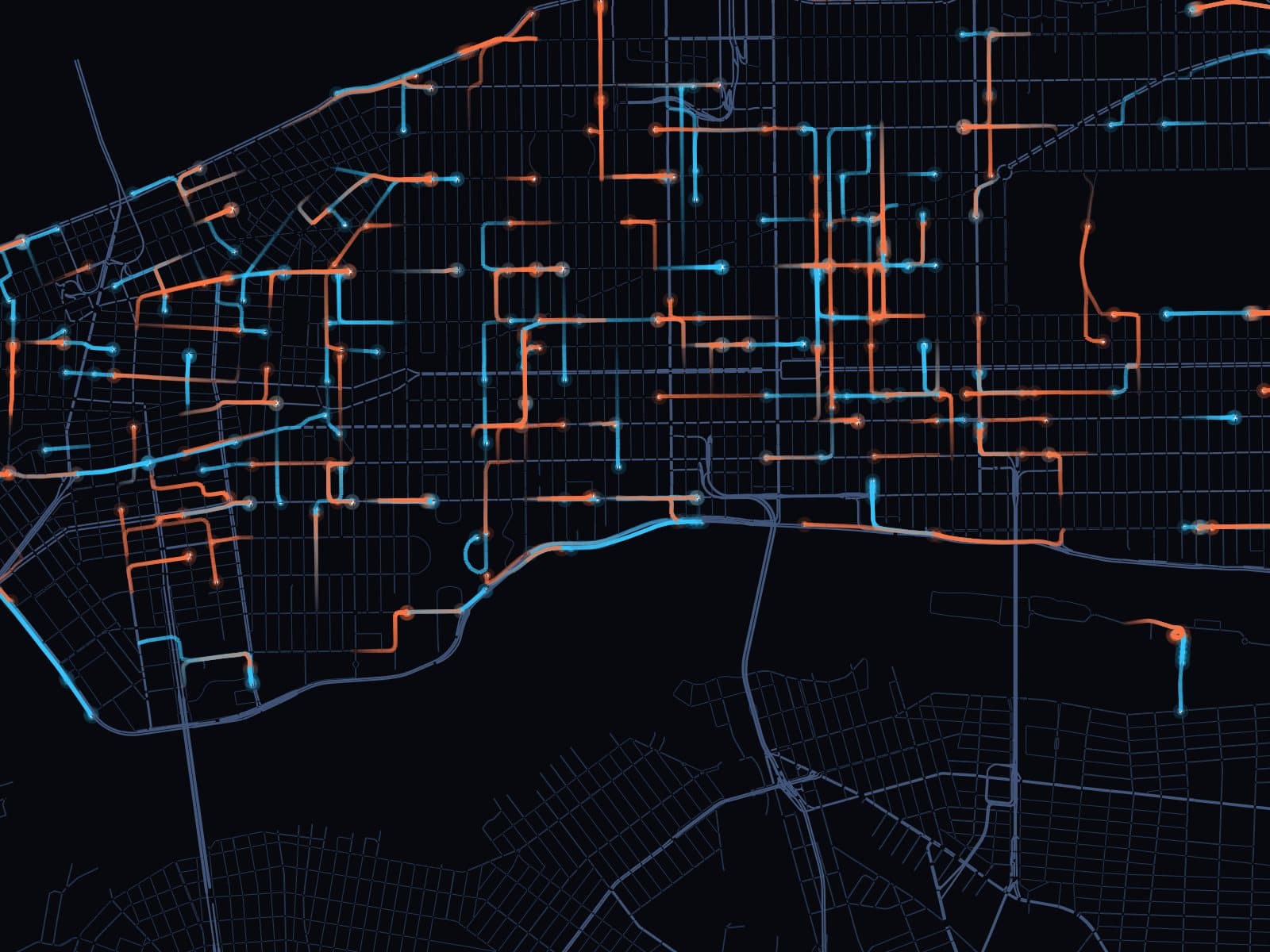
A research project at USC's SIAS Lab modeling two competing ride-hailing companies, each operating mixed fleets of human-driven and autonomous vehicles across 75 Manhattan taxi zones. Companies learn zone-level pricing and routing strategies via Independent Proximal Policy Optimization (IPPO) while competing for the same customer pool.
The simulation is closed-loop: customer demand drives traffic, traffic affects routing, routing affects congestion, and congestion feeds back into the next decision. Customers choose between companies using a logit utility model based on price, wait time, and travel time.
The environment runs on SUMO with Python controlling the simulation step-by-step at 1-second resolution, using real TLC trip data from Manhattan. I integrated zonal decision-making with road-level traffic-flow models, ensuring consistency between aggregate fleet actions and link-level congestion dynamics.
stack
Python · PyTorch · IPPO · SUMO · TraCI · Multi-Agent RL · Traffic Simulation · Real TLC Data